Meme Coin, How to Trade Them Without Becoming Exit Liquidity
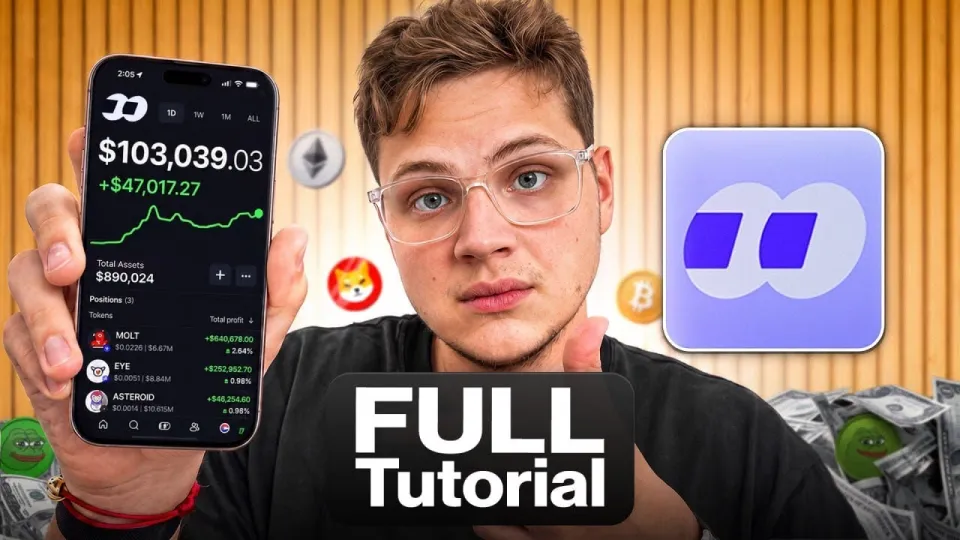
Video: How To Make Money Trading Memecoins (fomo app tutorial)
Need articles like this for your video? They help promote it on YouTube and Google — order them in the Telegram bot @sat_sit_bot. The bot writes and publishes the articles itself (with your YouTube video embedded) on popular topical websites (no ads). Try it free: 50 articles on us.
A meme coin is a cryptocurrency whose price depends on community attention, humor, and narrative rather than revenue, cash flow, or a working product. Trading meme coins means speculating on the speed and direction of that attention, usually on high-throughput chains such as Solana. The practical entry point for many newcomers is an aggregator app like fomo, which bundles new-pair discovery, charts, and execution into a single screen.
What makes a meme coin different from a normal token
A meme coin has no fundamental valuation model, so price is set almost entirely by supply and demand for attention. There is no discounted cash flow, no earnings multiple, and often no roadmap beyond the next viral post. That does not make the asset class irrational to trade; it makes it a different game, closer to event trading than to investing.
The mechanics are simple. A developer deploys a token, usually through a launchpad that seeds liquidity on a decentralized exchange. Early buyers get cheap entries, the chart goes vertical, and social feeds amplify the move. If attention fades, liquidity thins and the price collapses. Dogecoin is the historical template, but the modern cycle runs on Solana, where transaction fees are fractions of a cent and blocks confirm in well under a second, so a token can go from launch to a multi-million-dollar market cap within minutes.
Three features separate this market from blue-chip crypto:
- Speed. The full lifecycle of a launch, a run, and a dump can fit inside a single trading session.
- Liquidity fragility. Thin pools mean a single large sell can move price by double-digit percentages.
- Information asymmetry. Insiders and bots see new pairs before retail traders do.
How a fomo-style trading app fits into the workflow
An aggregator app like fomo compresses the beginner workflow into one interface: find a token, check its chart and liquidity, buy, and set an exit. In the tutorial published by the Orangie Web3 channel on 25 August 2026, the platform is presented as a simplified route into Solana meme coin trading for people who do not want to juggle a wallet extension, a launchpad, a charting tool, and a DEX separately.
A typical session looks like this:
- Open the discovery feed and filter for recent launches with rising volume.
- Check the chart, holder distribution, and liquidity before touching the buy button.
- Size the position so a total loss is survivable, not so large that a 30% drawdown forces a panic sell.
- Decide the exit before entering: a target multiple, a stop level, or a time limit.
- Execute and log the result, including the reason for the trade.
One recurring request from viewers of that tutorial is native price alerts. Until an app ships them, traders usually set manual alerts on a charting platform or check positions on a fixed schedule. The absence of alerts is a workflow gap, not a reason to skip the tool, but it does mean discipline has to come from the trader rather than the interface.
Why copy trading usually ends badly
The most common failure mode in meme coin trading is following a large wallet into a position after the move has already started. Experienced traders frequently buy on a secondary account before their main wallet, so anyone tracking the main wallet sees the buy only after the price has been pushed up. By the time a copy trade executes, the follower is buying the exit liquidity of the person they copied.
This is not a conspiracy theory; it is the standard structure of a market where information and execution speed are the edge. The practical conclusion is that wallet tracking is a research input, not a trading signal. If you use it at all, treat it as a hint to look at a token, then do your own check on liquidity, holder concentration, and how far the price has already traveled.
Risk management rules that survive contact with the market
Risk management is the only part of meme coin trading that can be systematized, because picking winners is close to random. Treat every position as a lottery ticket with a known cost, and keep the total cost of all tickets small relative to your capital.
- Cap any single position at a small fixed percentage of your portfolio, for example 1–3%.
- Take partial profits on the way up instead of waiting for a round number that may never print.
- Accept that the majority of launches fail; a portfolio of ten positions where one runs 20x can still be profitable if the other nine go to zero.
- Never add to a losing position hoping for a bounce in a token with no fundamentals.
- Withdraw profits to a stable asset periodically, so gains are not recycled into the next lottery ticket.
A viewer comment on the tutorial captures the other side of the risk: a wallet that was drained made one trader question whether the whole thing was too good to be true, and a later reload of roughly $90 produced about $30 of profit in a day before turning negative again. That pattern, a small win followed by a giveback, is typical when position sizing and exits are not defined in advance.
Common beginner questions answered
Beginners tend to ask the same handful of questions, and the answers are mostly about expectations rather than tactics. Does a low market cap mean the token is early? Not necessarily; it can mean the token is dead. Does a large holder count mean the token is safe? No, it means the supply is spread out, which is different from being fairly distributed.
What about tools? Price alerts, portfolio tracking, and a clear view of liquidity are the three features that matter most in day-to-day use, and any platform missing one of them will need a workaround. What about time? Meme coin trading rewards attention, so a trader who cannot watch positions during the session is at a structural disadvantage and should size accordingly.
Finally, coaching and structured learning come up repeatedly. The honest answer is that most of the skill is built by logging trades and reviewing them, not by watching more tutorials. A tutorial shortens the setup phase; it does not replace the feedback loop.
Useful links
- fomo trading platform, registration and referral access: https://fomo.family/r/orangie
- Orangie Web3 Discord community for meme coin discussion: https://discord.gg/memecoins
- Orangie on Instagram: https://www.instagram.com/orangieyt/
The bottom line on meme coin trading
Meme coin trading is a high-variance attention market, and the traders who last are the ones who treat it as a risk-budgeting exercise rather than a get-rich-quick scheme. Tools like fomo lower the operational barrier by putting discovery and execution in one place, but they cannot fix position sizing or force an exit. The Orangie Web3 channel built this walkthrough around exactly that gap, showing the mechanics while leaving the discipline to the viewer. Start with a small bankroll, define your exits before you enter, and treat every copy-trade signal as a question rather than an answer. If you want to follow the same setup shown in the tutorial, you can register through the fomo referral link.
Key takeaways
- A meme coin is a token whose value rests on community attention and narrative rather than cash flow, revenue, or product usage.
- Most meme coin activity in 2026 happens on Solana, where low fees and fast block times make rapid entries and exits possible.
- Trading platforms such as fomo aggregate new pairs, charts, and buy/sell actions in one interface, reducing the number of tools a beginner needs.
- Copy trading is the most common beginner mistake: large wallets often buy on a secondary account first, so followers enter at a worse price.
- Risk control matters more than picking: position sizing, pre-set exit rules, and accepting that most launches go to zero are the baseline.
Source: How To Make Money Trading Memecoins (fomo app tutorial) · Markdown version
Questions & answers
What exactly is a meme coin?
A meme coin is a cryptocurrency whose value comes from community attention and narrative rather than revenue or product usage. Prices are driven by supply and demand for attention, which makes the asset class closer to event trading than to investing. Most current activity runs on Solana because of low fees and fast confirmations.
Do I need a separate charting tool if I use a trading app?
Not always, but it helps. Aggregators like fomo show charts, liquidity, and buy/sell actions in one place, which is enough for simple trades. A separate charting platform becomes useful when you want price alerts or deeper historical data that the app does not provide.
Is copy trading a reliable way to make money on meme coins?
Usually not. Large wallets often buy on a secondary account before their main wallet, so followers enter after the price has already moved. Treat wallet tracking as a research hint and verify liquidity, holder concentration, and how far the price has traveled before buying.
How much capital should a beginner risk?
Only an amount whose total loss would not change your financial situation, typically a small fixed percentage of your portfolio per position. Most launches fail, so the goal is to survive a string of losses long enough for a winner to matter. Withdraw profits periodically instead of recycling everything.